

اتجاهات واجهات خفيفة الوزن: تقليل الحمل الهيكلي في ناطحات السحاب في العاصمة بألواح ACM الرخامية
2026-07-17
.gtr-container-7f3e9a {
font-family: Verdana, Helvetica, "Times New Roman", Arial, sans-serif;
color: #333333;
line-height: 1.6;
padding: 20px;
max-width: 100%;
box-sizing: border-box;
overflow-wrap: break-word;
word-break: normal;
}
.gtr-container-7f3e9a p {
font-size: 14px;
margin-bottom: 1em;
text-align: left !important;
}
.gtr-container-7f3e9a strong {
font-weight: bold;
}
.gtr-container-7f3e9a .gtr-title-main {
font-size: 18px;
font-weight: bold;
color: #3176FF;
margin-bottom: 1.5em;
line-height: 1.3;
text-align: left;
}
.gtr-container-7f3e9a .gtr-title-section {
font-size: 18px;
font-weight: bold;
color: #3176FF;
margin-top: 2em;
margin-bottom: 1em;
line-height: 1.4;
text-align: left;
}
.gtr-container-7f3e9a .gtr-title-subsection {
font-size: 16px;
font-weight: bold;
color: #3176FF;
margin-top: 1.5em;
margin-bottom: 0.8em;
line-height: 1.5;
text-align: left;
}
.gtr-container-7f3e9a ul,
.gtr-container-7f3e9a ol {
margin: 1em 0;
padding-left: 25px;
list-style: none !important;
}
.gtr-container-7f3e9a ul li,
.gtr-container-7f3e9a ol li {
position: relative;
margin-bottom: 0.5em;
padding-left: 20px;
font-size: 14px;
text-align: left;
list-style: none !important;
}
.gtr-container-7f3e9a ul li::before {
content: "•" !important;
position: absolute !important;
left: 0 !important;
color: #3176FF;
font-size: 1.2em;
line-height: 1;
}
.gtr-container-7f3e9a ol {
counter-reset: list-item;
}
.gtr-container-7f3e9a ol li::before {
content: counter(list-item) "." !important;
position: absolute !important;
left: 0 !important;
color: #3176FF;
font-weight: bold;
width: 20px;
text-align: right;
line-height: 1.6;
}
.gtr-container-7f3e9a .gtr-table-wrapper {
overflow-x: auto;
margin-top: 1.5em;
margin-bottom: 2em;
}
.gtr-container-7f3e9a table {
width: 100%;
border-collapse: collapse !important;
border-spacing: 0 !important;
margin: 0 !important;
min-width: 600px;
}
.gtr-container-7f3e9a th,
.gtr-container-7f3e9a td {
border: 1px solid #D0D0D0 !important;
padding: 10px 15px !important;
text-align: left !important;
vertical-align: top !important;
font-size: 14px !important;
word-break: normal !important;
overflow-wrap: normal !important;
}
.gtr-container-7f3e9a thead th {
background-color: #E6F0FF;
color: #3176FF;
font-weight: bold !important;
}
.gtr-container-7f3e9a tbody tr:nth-child(even) {
background-color: rgba(49, 118, 255, 0.03);
}
.gtr-container-7f3e9a tbody tr:hover {
background-color: rgba(49, 118, 255, 0.1);
}
@media (min-width: 768px) {
.gtr-container-7f3e9a {
padding: 30px 40px;
}
.gtr-container-7f3e9a .gtr-title-main {
font-size: 24px;
}
.gtr-container-7f3e9a .gtr-title-section {
font-size: 20px;
}
.gtr-container-7f3e9a .gtr-title-subsection {
font-size: 18px;
}
.gtr-container-7f3e9a table {
min-width: auto;
}
}
اتجاهات واجهات المباني خفيفة الوزن: تقليل الحمل الهيكلي في ناطحات السحاب في ألماتي باستخدام ألواح ACM الرخامية
تمثل ألماتي، المركز المالي والثقافي لكازاخستان، بيئة متطلبة للتصميم المعماري الحديث. مع ارتفاع أفق المدينة، يواجه مهندسو الواجهات تقاطعًا هيكليًا حاسمًا: التفضيل المعماري العميق لجماليات الحجر الطبيعي المتميزة التي تتجه مباشرة إلى مناطق النشاط الزلزالي الشديدة وتقلبات درجات الحرارة الموسمية الهائلة.
بالنسبة للتطورات الشاهقة في ألماتي، لم يعد تخفيف الحمل الساكن لغلاف المبنى مجرد أحد الاعتبارات المتعلقة بالميزانية - بل أصبح متطلبًا أساسيًا للسلامة والهيكلية. إن التحول المتزايد نحو ألواح الألومنيوم المركبة خفيفة الوزن (ACM) ذات التشطيبات الرخامية المتقدمة يُحدث ثورة في كيفية تحقيق ناطحات السحاب في آسيا الوسطى لجماليات فاخرة دون المساس بالسلامة الهيكلية.
التحدي الهيكلي: الحمل الزلزالي مقابل الحجر الثقيل في ألماتي
تقع ألماتي في منطقة نشطة زلزاليا عند سفح جبال Trans-Ili Alatau. في الهندسة الإنشائية، تتناسب القوة الجانبية الديناميكية المطبقة على ناطحة سحاب أثناء حدوث زلزال بشكل مباشر مع الكتلة الإجمالية للمبنى ($F = م \cdot a$).
خطر الحمولة الميتة:إن الكسوة الحجرية الطبيعية التقليدية (مثل الرخام أو الجرانيت بسمك 25 مم - 30 مم) تقدم حمولة هائلة من$65\نص{كجم/م}^2$ل$80\نص{كجم/م}^2$إلى الجزء الخارجي للمبنى. في المباني الشاهقة، يُترجم هذا إلى مئات الأطنان من وزن السحب، مما يجبر المهندسين الإنشائيين على المبالغة في هندسة الأساسات والأعمدة وجدران القص.
تضخيم الإجهاد الحراري:في ألماتي، حيث تجتاح درجات الحرارة الموسمية$-30^\circ\text{C}$في الشتاء لأكثر من ذلك$35^\circ\text{C}$في الصيف، تواجه الواجهات الحجرية الثقيلة تمددًا وانكماشًا حراريًا مستمرًا. تضع هذه الدورة الحرارية ضغطًا هائلاً على نقاط التثبيت الحجرية الصلبة، مما يزيد من خطر التشققات الدقيقة وانفصال اللوحة الكارثي أثناء الزلزال.
الحل: الفوائد الهندسية لألواح ACM ذات التشطيب الرخامي
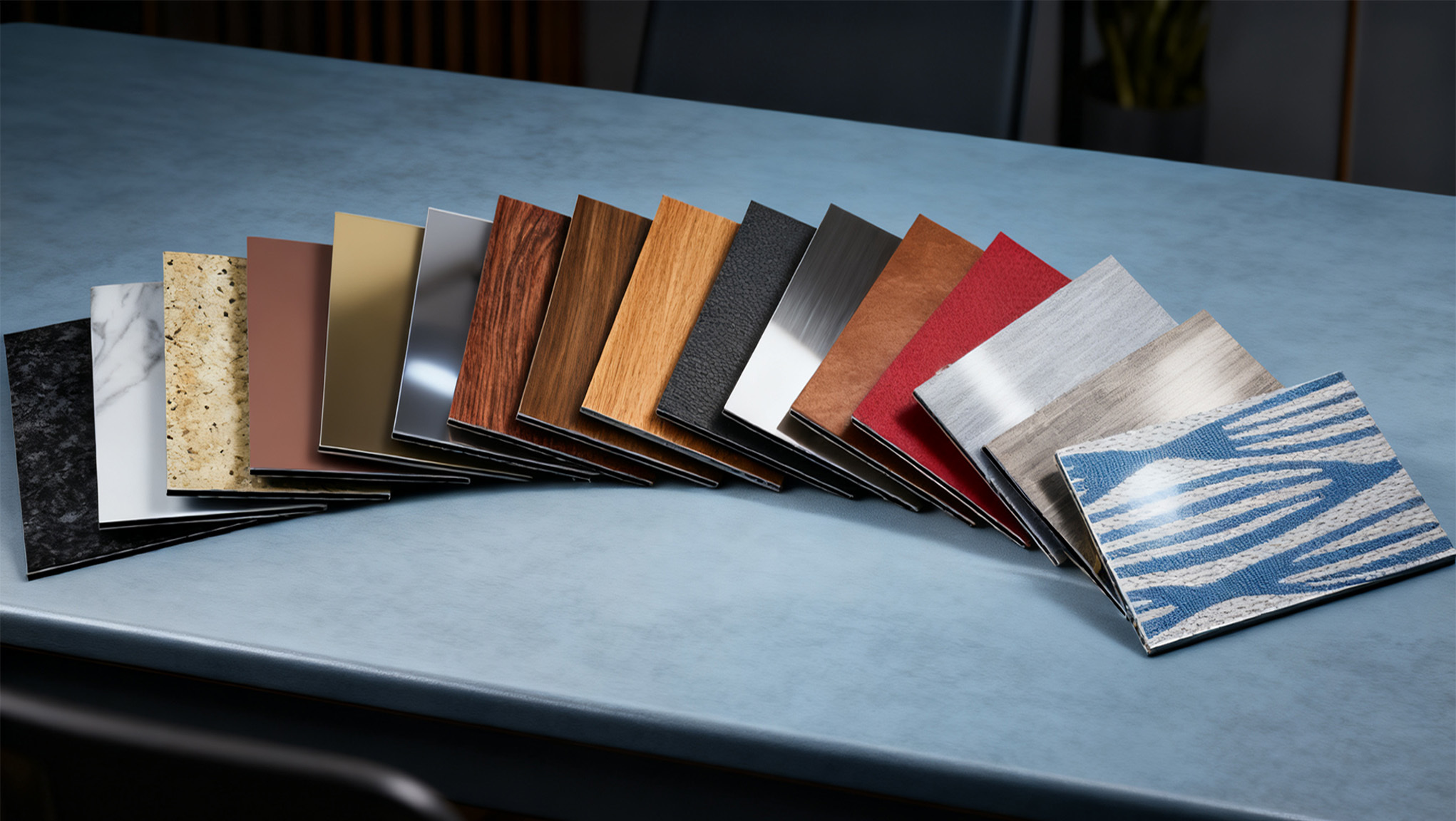
تعمل ألواح ACM المصنوعة من الرخام على حل هذه المفارقة الهندسية عن طريق فصل الوزن البصري المتميز للحجر عن كتلته المادية. تتكون هذه الألواح من طبقتين من الألومنيوم المرن المرتبطين بقلب مملوء بالمعادن أو مثبط للحريق (FR) أو غير قابل للاحتراق، مما يعيد تعريف الأداء في المباني الشاهقة.
1. إزالة 85% من الأحمال الميتة على الواجهة
الميزة الأكثر أهمية للانتقال من الحجر الطبيعي إلى الرخام ACM هي التخفيض الجذري في الكتلة:
الرخام الطبيعي: $\sim 70\text{kg/m}^2$
رخام ACM (جلد 4 مم/0.50 مم): $\sim 5.5 - 7.5\text{kg/m}^2$
ومن خلال التحول إلى ACM، يتم تقليل وزن غلاف ناطحة السحاب بنسبة تزيد عن 85%. يؤدي هذا الانخفاض الهائل إلى خفض مركز ثقل المبنى بشكل كبير ويقلل بشكل كبير من قوى القصور الذاتي التي تعمل على الإطار الفرعي الفولاذي أو الخرساني أثناء حدوث زلزال. فهو يسمح للمهندسين المعماريين بتصميم هياكل هيكلية أخف وزنا وأكثر فعالية من حيث التكلفة مع الحفاظ على الوجود الراقي والمسيطر لمبنى رخامي شاهق.
2. الهياكل الأساسية المرنة والإزاحة الحرارية
على عكس أنظمة التثبيت الصلبة والصلبة المطلوبة للأحجار الثقيلة، تستخدم ألواح ACM أنظمة حاجبة المطر المعلقة أو المنزلقة المصممة هندسيًا.
عندما تشهد ألماتي تغيرات شديدة في درجات الحرارة نهاريًا أو موسميًا، تتمدد جلود الألومنيوم وتتقلص بشكل مرن. يتم امتصاص الحركة الحرارية المتوقعة عبر فارق كبير في درجات الحرارة بسلاسة من خلال مقاطع الإطار الفرعي المشقوقة ومفاصل التمدد المرنة، مما يضمن عدم تراكم أي ضغط داخلي داخل مصفوفة اللوحة. في ظل التحولات الزلزالية، يعمل هذا التصميم المرن وخفيف الوزن بمثابة ستارة ممتصة للصدمات بدلاً من جدار صلب وهش.
المقارنة الفنية: المقاييس الهندسية الشاهقة
متري هندسي
حجر طبيعي ثقيل (25 ملم)
لمسة نهائية من الرخام ACM (4 مم)
الفوائد الهيكلية والزلازل
تأثير الوزن
مرتفع (65 - 80\نص{ كجم/م}^2$)
منخفض للغاية (5.5 - 7.5\نص{ كجم/م2}^2$)
يقلل من القوى الزلزالية الجانبية. يقلل من تكاليف الأساس والإطار الفرعي.
مرونة المواد
منخفض (خطر الكسر الهش)
ليونة عالية (يمتص الانحراف)
ينتج بأمان تحت أحمال الرياح والتحولات الزلزالية دون تكسير.
سرعة التثبيت
بطيء؛ يتطلب الرافعات الثقيلة والمراسي الضخمة
سريع؛ الألواح خفيفة الوزن تقلل من مدة العمل والسقالات
يقلل من أوقات دورة البناء للتطورات الشاهقة.
الرطوبة / التجميد والذوبان
مسامية. خطر كبير من الصقيع
امتصاص 0.00%(كتيمة)
يزيل تشققات التجميد والذوبان الشائعة في فصول الشتاء القاسية في ألماتي.
الخلاصة: المعيار الحديث لناطحات السحاب في ألماتي
في الوقت الذي تتخطى فيه ألماتي حدود العمارة العمودية الحديثة، فإن التحول إلى أغلفة المباني خفيفة الوزن يتسارع. توفر ألواح ACM ذات التشطيب الرخامي عالي الأداء نسخة متماثلة لا تشوبها شائبة من القوام الحجري المتميز والعرق من خلال طبقات لفائف PVDF المتقدمة المقاومة للأشعة فوق البنفسجية.
بالنسبة للمطورين والمهندسين الإنشائيين ومحترفي المشتريات في مجال B2B، فإن تحديد ACM للرخام يعد قرارًا هندسيًا استراتيجيًا. فهو يجمع بشكل مثالي بين هيبة الرخام الخالدة والأداء البدني المتطور الذي تتطلبه المدينة الرائدة في آسيا الوسطى في مجال الزلازل والمناخ المتطرف.
عرض المزيد
لماذا يعد Marble Finish ACP الحل المثالي للواجهة لمناخات جنوب شرق آسيا
2026-07-17
.gtr-container-d7e9f0 {
font-family: Verdana, Helvetica, "Times New Roman", Arial, sans-serif;
color: #333333;
line-height: 1.6;
padding: 20px;
max-width: 100%;
box-sizing: border-box;
}
.gtr-container-d7e9f0 p {
margin-bottom: 1em;
text-align: left !important;
font-size: 14px;
}
.gtr-container-d7e9f0 strong {
font-weight: bold;
color: #3176FF;
}
.gtr-container-d7e9f0 .gtr-title-main {
font-size: 18px;
font-weight: bold;
color: #3176FF;
margin-bottom: 1.5em;
line-height: 1.4;
text-align: left;
}
.gtr-container-d7e9f0 .gtr-title-section {
font-size: 18px;
font-weight: bold;
color: #3176FF;
margin-top: 2em;
margin-bottom: 1em;
line-height: 1.4;
text-align: left;
}
.gtr-container-d7e9f0 .gtr-title-subsection {
font-size: 16px;
font-weight: bold;
color: #3176FF;
margin-top: 1.5em;
margin-bottom: 0.8em;
line-height: 1.4;
text-align: left;
}
.gtr-container-d7e9f0 ul {
list-style: none !important;
padding-left: 20px !important;
margin-bottom: 1em;
}
.gtr-container-d7e9f0 ul li {
position: relative !important;
padding-left: 20px !important;
margin-bottom: 0.5em;
font-size: 14px;
text-align: left;
list-style: none !important;
}
.gtr-container-d7e9f0 ul li::before {
content: "•" !important;
position: absolute !important;
left: 0 !important;
color: #3176FF !important;
font-size: 1.2em !important;
line-height: 1;
}
.gtr-container-d7e9f0 ol {
list-style: none !important;
padding-left: 25px !important;
margin-bottom: 1em;
counter-reset: list-item;
}
.gtr-container-d7e9f0 ol li {
position: relative !important;
padding-left: 25px !important;
margin-bottom: 0.5em;
font-size: 14px;
text-align: left;
list-style: none !important;
}
.gtr-container-d7e9f0 ol li::before {
content: counter(list-item) "." !important;
position: absolute !important;
left: 0 !important;
color: #3176FF !important;
font-weight: bold !important;
width: 1.5em !important;
text-align: right !important;
counter-increment: none;
}
.gtr-container-d7e9f0 .gtr-table-wrapper {
overflow-x: auto;
margin-top: 2em;
margin-bottom: 2em;
border-radius: 8px;
box-shadow: 0 2px 8px rgba(0, 0, 0, 0.1);
}
.gtr-container-d7e9f0 .gtr-data-table {
width: 100% !important;
border-collapse: collapse !important;
border-spacing: 0 !important;
min-width: 700px;
font-size: 14px;
}
.gtr-container-d7e9f0 .gtr-data-table th,
.gtr-container-d7e9f0 .gtr-data-table td {
border: 1px solid #d0d0d0 !important;
padding: 10px 15px !important;
text-align: left !important;
vertical-align: top !important;
word-break: normal !important;
overflow-wrap: normal !important;
}
.gtr-container-d7e9f0 .gtr-data-table th {
background-color: #f0f7ff !important;
font-weight: bold !important;
color: #3176FF !important;
}
.gtr-container-d7e9f0 .gtr-data-table tbody tr:nth-child(even) {
background-color: #f8f8f8 !important;
}
.gtr-container-d7e9f0 .gtr-data-table tbody tr:hover {
background-color: #e6f2ff !important;
}
@media (min-width: 768px) {
.gtr-container-d7e9f0 {
padding: 30px 40px;
}
.gtr-container-d7e9f0 .gtr-title-main {
font-size: 24px;
}
.gtr-container-d7e9f0 .gtr-title-section {
font-size: 20px;
}
.gtr-container-d7e9f0 .gtr-title-subsection {
font-size: 18px;
}
.gtr-container-d7e9f0 .gtr-data-table {
min-width: auto;
}
}
التخفيف من التمدد الحراري ومخاطر العفن: لماذا يعتبر طلاء الرخام ACP هو الحل المثالي للواجهة للمناخات القاسية في جنوب شرق آسيا
في التوسع الحضري السريع في جنوب شرق آسيا، تواجه هندسة الواجهات المعمارية مجموعة فريدة وقاسية من التحديات المادية. وعلى عكس المناطق الشمالية التي تكافح درجات الحرارة المتجمدة، فإن مناطق مثل فيتنام وتايلاند وإندونيسيا يجب أن تتحمل درجات حرارة مرتفعة بشكل مستمر، والأشعة فوق البنفسجية الشديدة، والرطوبة الشديدة، ومواسم الرياح الموسمية الغزيرة، ورذاذ الملح الساحلي المسبب للتآكل.
عندما يتم استخدام الكسوة الثقيلة التقليدية مثل الرخام الطبيعي أو الجرانيت في ظل هذه الظروف الاستوائية، فإن الجمع بين التعرض الشديد للحرارة أثناء النهار والرطوبة العالية يؤدي في كثير من الأحيان إلى تشقق الحجارة، وفشل التثبيت، والتدهور الجمالي، ومخاطر الانفصال الكارثية.
بالنسبة للمشترين الدوليين ومديري المشتريات الذين يستوردون مواد البناء من منصات التجارة العالمية، فإن فهم المزايا الهندسية لألواح الألومنيوم المركبة ذات اللمسة الرخامية (ACP) مقارنة بالحجر الطبيعي يعد أمرًا بالغ الأهمية لاستمرارية المشروع على المدى الطويل في المناخات الاستوائية.
رؤى فنية: لماذا يفشل الحجر الطبيعي في البيئات الاستوائية
ينبع تدهور الواجهات الحجرية الطبيعية في المناطق الساحلية والاستوائية في جنوب شرق آسيا من مشكلتين هندسيتين رئيسيتين:التعب الإجهاد الحراريوامتصاص الرطوبة المسامية.
1. الإجهادات الحرارية النهارية والكسور الهشة
في المناطق الاستوائية، يمكن لأشعة الشمس المباشرة في منتصف النهار أن تتسبب بسهولة في ارتفاع درجة حرارة سطح الحجر الطبيعي الداكن أو عالي الكثافة إلى ما يزيد عن 60 درجة مئوية إلى 70 درجة مئوية. عندما تتسبب الرياح الموسمية بعد الظهر أو حلول الليل في انخفاض درجات الحرارة بشكل حاد، فإنها تخلق إجهادًا حراريًا نهاريًا هائلاً. نظرًا لأن الرخام الطبيعي شديد الصلابة والهشاشة، فإنه يفتقر إلى المرونة اللازمة لامتصاص هذه التغييرات في الأبعاد. على مدار سنوات من دورات التمدد والانكماش المتكررة، تنتشر الكسور الصغيرة عبر الحجر، خاصة حول نقاط التثبيت الميكانيكية، مما يؤدي إلى قص المرساة بشكل مفاجئ.
2. الإزهار ونمو العفن مدفوعان بالرطوبة العالية
الحجر الطبيعي مسامي بطبيعته. تسمح مواسم الأمطار الطويلة في جنوب شرق آسيا والرطوبة المحيطة العالية للرطوبة باختراق مصفوفة الكسوة بشكل مستمر. عندما يتسرب الماء من خلاله، فإنه يذيب الأملاح القابلة للذوبان والقلويات داخل البنية التحتية الخرسانية أو الملاط. عندما تتبخر الرطوبة، فإنها تترك وراءها رواسب بلورية بيضاء قبيحة الشكل على السطح الخارجي - وهي عملية مدمرة تعرف باسم الإزهار أو الارتداد القلوي. علاوة على ذلك، يعد هذا السطح الدافئ الرطب بمثابة أرض خصبة لتكاثر الطحالب والعفن، مما يضر بشدة بالقيمة الجمالية للمبنى في غضون بضع سنوات.
دليل اختيار المواد: كيف تحل هندسة ACP لتشطيب الرخام التحديات الاستوائية
يتغلب Marble Finish ACP على نقاط الضعف الهيكلية والتجميلية هذه عن طريق استبدال نظام ثقيل وصلب ومسامي بهيكل شطيرة مركب هندسيًا متقدم.
1. تصميم مرن يمتص الحركة الحرارية وأحمال الرياح الإعصارية
على عكس الحجر المتجانس، يتكون ACP من طبقتين من الألومنيوم من الدرجة المعمارية يقعان في قلب مثبط الحريق (FR) أو البولي إيثيلين المملوء بالمعادن.
تبديد التوتر:في حين أن الألومنيوم لديه معامل تمدد حراري أعلى من الحجر، فإنه يمتلك ليونة استثنائية وقوة شد (تتجاوز 130 ميجا باسكال). مع توسع الجلد الخارجي تحت الشمس الاستوائية، تعمل الطبقة الأساسية كوسادة ممتصة للقص، مما يمنع تراكم الضغط الداخلي.
مقاومة الاعصار:المناطق الساحلية في جنوب شرق آسيا معرضة بشدة للعواصف الاستوائية الشديدة. نظرًا لأن ACP خفيف الوزن (يقلل من الحمل الميت بنسبة تزيد عن 85% مقارنة بحجر 25 مم) ومرن من الناحية الهيكلية، فإنه يمكن أن ينحرف بأمان تحت ضغوط الرياح الديناميكية العالية دون التسبب في إجهاد هيكلي أو فشل مفصل كارثي.
2. امتصاص الماء الصفري يزيل الإزهار والنمو البيولوجي
يتميز ACP عالي الجودة بلمسة نهائية من الرخام بسطح معدني غير مسامي تمامًا مع معدل امتصاص الماء بدقة0.00%.
من خلال منع دخول الرطوبة إلى نظام الواجهة، فإنه يزيل تمامًا المسارات المادية اللازمة للإزهار والتلطيخ والتعفن الداخلي. حتى أثناء هطول الأمطار الموسمية الشديدة، تظل الألواح غير منفذة، مما يحافظ على غلاف المبنى الأساسي جافًا وخاليًا من النمو البيولوجي.
المقارنة الهندسية: الحجر الطبيعي مقابل طلاء الرخام ACP
متري هندسي
تجاليد رخام طبيعي (25 ملم)
طلاء رخامي ACP (جلد 4 مم / 0.50 مم)
فائدة هندسة الواجهة في المناطق الاستوائية
معدل امتصاص الماء
0.2% - 2.0% (مسامية)
0.00%(كتيمة)
يزيل تمامًا الإزهار والعفن والرطوبة الهيكلية الداخلية.
الحمولة الميتة (الوزن)
65 - 80 كجم/م2
5.5 - 7.5 كجم/م²
يقلل الحمل الساكن بنسبة تزيد عن 85%، مما يقلل الضغط على الإطارات الفرعية والأساسات أثناء الأحداث الزلزالية أو الرياح العاتية.
قوة الشد
متغير / منخفض (هش)
≥ 130 ميجا باسكال(ليونة عالية)
يمتص أحمال الرياح الديناميكية العالية والتمدد الحراري المكثف دون تشقق.
تكنولوجيا طلاء السطح
سطح طبيعي عرضة للتآكل الناتج عن الأمطار الحمضية والذبول.
طلاء PVDF المتقدم أو FEVE متعدد الطبقات
يوفر مقاومة ممتازة للأشعة فوق البنفسجية والاستقرار الكيميائي. يمنع الطباشير والبهتان لأكثر من 20 عامًا.
الخلاصة: الموازنة بين الجماليات الفاخرة وطول العمر الهيكلي
بالنسبة للمشاريع المعمارية الحديثة B2B في جميع أنحاء جنوب شرق آسيا، فإن الحفاظ على الجماليات المتميزة مع ضمان متانة لا تحتاج إلى صيانة هو الهدف النهائي. يستخدم طلاء الرخام الفاخر ACP تقنية الطلاء الدوارة الدقيقة متعددة الطبقات لتحقيق تمثيل واقعي بنسبة 100% لتركيبات الحجر الطبيعي والتعرق ومستويات اللمعان.
عند هندسة الواجهات للأسواق الاستوائية ذات درجات الحرارة العالية والرطوبة العالية والمعرضة للأعاصير، يتم تحديدطلاء رخام PVDF ACPيمثل ترقية فعالة من حيث التكلفة ومتينة وموثوقة للغاية مقارنة بالحجر التقليدي - مما يوفر واجهة طويلة الأمد وخالية من الشقوق للبناء التجاري العالمي.
عرض المزيد
Common Facade Material Risks in Southeast Asia and How PVDF ACP Helps Reduce Them
2026-06-30
/* Unique class name for encapsulation */
.gtr-container-f7h2k3 {
font-family: Verdana, Helvetica, "Times New Roman", Arial, sans-serif;
color: #333;
line-height: 1.6;
padding: 15px;
max-width: 100%;
box-sizing: border-box;
}
.gtr-container-f7h2k3 {
background-color: transparent;
}
.gtr-container-f7h2k3 {
border: none;
outline: none;
}
.gtr-container-f7h2k3 .gtr-heading {
font-size: 18px;
font-weight: bold;
margin-top: 25px;
margin-bottom: 15px;
color: #3176FF;
text-align: left;
}
.gtr-container-f7h2k3 p {
font-size: 14px;
margin-bottom: 15px;
text-align: left !important;
}
.gtr-container-f7h2k3 strong {
font-weight: bold;
color: #333;
}
.gtr-container-f7h2k3 ul {
list-style: none !important;
padding-left: 20px;
margin-bottom: 15px;
}
.gtr-container-f7h2k3 ul li {
position: relative;
padding-left: 20px;
margin-bottom: 8px;
font-size: 14px;
text-align: left;
list-style: none !important;
}
.gtr-container-f7h2k3 ul li::before {
content: "•" !important;
position: absolute !important;
left: 0 !important;
color: #3176FF;
font-size: 1.2em;
line-height: 1;
top: 0;
}
.gtr-container-f7h2k3 ol {
list-style: none !important;
padding-left: 25px;
margin-bottom: 15px;
}
.gtr-container-f7h2k3 ol li {
position: relative;
padding-left: 25px;
margin-bottom: 8px;
font-size: 14px;
text-align: left;
list-style: none !important;
}
.gtr-container-f7h2k3 ol li::before {
content: counter(list-item) "." !important;
position: absolute !important;
left: 0 !important;
color: #3176FF;
font-size: 1em;
line-height: 1;
top: 0;
width: 1.5em;
text-align: right;
}
.gtr-container-f7h2k3 .gtr-table-wrapper {
width: 100%;
overflow-x: auto;
margin-bottom: 20px;
}
.gtr-container-f7h2k3 table {
width: 100%;
border-collapse: collapse !important;
border-spacing: 0 !important;
min-width: 600px;
font-size: 14px;
text-align: left;
}
.gtr-container-f7h2k3 th,
.gtr-container-f7h2k3 td {
border: 1px solid #ccc !important;
padding: 10px !important;
text-align: left !important;
vertical-align: top !important;
word-break: normal;
overflow-wrap: normal;
}
.gtr-container-f7h2k3 th {
font-weight: bold !important;
background-color: #f0f0f0;
color: #333;
}
.gtr-container-f7h2k3 tr:nth-child(even) {
background-color: #f9f9f9;
}
.gtr-container-f7h2k3 tr:nth-child(odd) {
background-color: #ffffff;
}
@media (min-width: 768px) {
.gtr-container-f7h2k3 {
padding: 25px 40px;
max-width: 960px;
margin: 0 auto;
}
.gtr-container-f7h2k3 .gtr-heading {
font-size: 22px;
margin-top: 30px;
margin-bottom: 20px;
}
.gtr-container-f7h2k3 p {
font-size: 14px;
margin-bottom: 18px;
}
.gtr-container-f7h2k3 ul {
padding-left: 25px;
}
.gtr-container-f7h2k3 ul li {
padding-left: 25px;
}
.gtr-container-f7h2k3 ul li::before {
font-size: 1.3em;
}
.gtr-container-f7h2k3 .gtr-table-wrapper {
overflow-x: visible;
}
.gtr-container-f7h2k3 table {
min-width: auto;
}
}
Introduction: Southeast Asia Is Not a Mild Climate
Every building material performs differently under stress — and Southeast Asia delivers stress in abundance. With equatorial UV indexes routinely exceeding 10, monsoon-season relative humidity above 85%, and coastal salt spray in most major cities, facade materials in the region face an accelerated aging environment that exposes weaknesses far sooner than temperate-zone specifications would predict.
The purpose of this article is not to claim that any material eliminates these risks entirely — no material does. Rather, it is to examine the three most common failure modes observed in Southeast Asian facades, and explain how PVDF ACP makes these risks controllable, predictable, and manageable — not avoided, but engineered into acceptable bounds.
Risk 1: Premature Fading
Color fading is the most visible — and often the earliest — sign of facade material degradation in tropical climates. Under sustained high-UV exposure, organic pigments and resin binders in coating systems undergo photochemical breakdown. The result is a measurable shift in color that progresses from subtle to obvious within a few years.
What drives accelerated fading in Southeast Asia:
Year-round high solar irradiance (daily peak UV Index 10–12) with no winter respite
Dark-colored facades absorb more thermal energy, accelerating pigment degradation
Combined effect of UV + humidity creates hydrolytic pathways that break down coating resins faster than UV alone
With standard polyester coatings, color shift (ΔE > 3) is commonly observed within 18–30 months in equatorial exposure. PVDF coatings, by contrast, leverage the carbon-fluorine bond — one of the strongest covalent bonds in organic chemistry — which is virtually inert to UV photolysis. Independent weathering studies consistently show PVDF retaining over 80% of original gloss and ΔE under 2 after a decade or more of Florida exposure, a standard proxy for tropical conditions.
Risk 2: Surface Chalking
Chalking is the progressive degradation of the coating surface into a loose, powdery residue. It occurs when the polymer matrix of the coating breaks down under UV attack, leaving exposed pigment particles that can be wiped off by hand. While chalking begins as a cosmetic issue, it signals deeper coating failure and accelerates further degradation by increasing surface porosity.
Why chalking is particularly aggressive in the region:
UV photo-oxidation of the coating binder is continuous, not seasonal
Frequent heavy rainfall washes away degraded surface material, constantly exposing fresh layers to UV attack — a cyclic erosion process
Once chalking begins, the roughened surface traps dirt and biological growth (mold, algae), compounding aesthetic degradation
PVDF coatings resist chalking through the inherent chemical stability of the fluoropolymer backbone. Unlike polyester or acrylic resins that contain UV-sensitive ester or ether linkages, the fully fluorinated PVDF structure offers no reactive sites for photo-oxidation to attack. The result is a coating that maintains surface integrity for 15–20+ years even under continuous equatorial exposure.
Risk 3: Delamination and Structural Instability
Delamination — the separation of the aluminum skin from the polyethylene core — is the most serious of the three risks because it transitions from aesthetic concern to structural hazard. When moisture penetrates through a degraded or micro-cracked coating and reaches the bond interface between aluminum and core, it initiates progressive bond failure that can spread across entire panel sections.
Contributing factors in Southeast Asian conditions:
Persistent high humidity maintains a constant moisture drive across the coating barrier
Thermal cycling (diurnal swings of 10–15°C on dark surfaces) creates differential expansion between aluminum skin and PE core, mechanically stressing the adhesive bond
Coastal salt deposition accelerates corrosion at any exposed aluminum edge or coating breach
PVDF ACP addresses delamination risk through two mechanisms. First, the superior long-term integrity of the PVDF coating maintains an effective moisture barrier far longer than alternative coatings, preventing the water ingress that initiates bond failure. Second, the dimensional stability of PVDF under thermal cycling reduces coating micro-cracking, preserving the barrier function across years of expansion-contraction cycles.
The Risk Philosophy: Controllable, Not Avoided
No facade material — including PVDF ACP — can guarantee zero degradation in Southeast Asian conditions. Coatings will weather, colors will shift, and surfaces will age. The engineering question is not whether these things happen, but at what rate, with what predictability, and with what consequence.
Risk
Standard Coating (Polyester)
PVDF Coating
Risk Reduction
Fading (ΔE > 3)
18–30 months
10+ years (ΔE < 2)
4–6× longer service window
Chalking Onset
2–4 years
15–20+ years
5–7× longer surface integrity
Delamination Risk
Elevated after 5–8 years
Minimal within 15–20 year window
Barrier integrity maintained 3× longer
Predictability
Variable — batch and exposure dependent
Highly consistent — well-documented weathering data
Engineering-grade predictability
PVDF ACP does not eliminate these risks. It compresses them into a much longer, more predictable timeline — converting unknowns into knowns, and allowing project stakeholders to plan maintenance cycles with confidence rather than react to surprises.
Conclusion
In Southeast Asia's high-UV, high-humidity environment, facade material selection is fundamentally a risk management exercise. Premature fading, surface chalking, and delamination are not rare exceptions — they are predictable consequences of material choices made at specification stage. PVDF ACP cannot make these risks disappear, but it can make them slow, measurable, and manageable across a 15–20 year service window. For developers, architects, and contractors who value predictability over short-term savings, that distinction is the entire business case.
عرض المزيد
Why Color Consistency Matters in Large-Scale ACP Facade Projects: A Project Management Perspective
2026-06-30
/* Root container */
.gtr-container-x7y2z9 {
font-family: Verdana, Helvetica, "Times New Roman", Arial, sans-serif;
color: #333;
line-height: 1.6;
padding: 15px;
box-sizing: border-box;
}
/* Headings (converted from h3) */
.gtr-container-x7y2z9 .gtr-heading-level3 {
font-size: 18px;
font-weight: bold;
margin-top: 25px;
margin-bottom: 15px;
color: #3176FF;
text-align: left;
}
/* Paragraphs */
.gtr-container-x7y2z9 p {
font-size: 14px;
margin-bottom: 1em;
text-align: left !important;
}
/* Unordered List */
.gtr-container-x7y2z9 ul {
list-style: none !important;
padding-left: 20px;
margin-bottom: 1em;
}
.gtr-container-x7y2z9 ul li {
list-style: none !important;
position: relative;
padding-left: 20px;
margin-bottom: 0.5em;
font-size: 14px;
text-align: left !important;
}
.gtr-container-x7y2z9 ul li::before {
content: "•" !important;
position: absolute !important;
left: 0 !important;
color: #3176FF;
font-size: 1.2em;
line-height: 1;
}
/* Ordered List */
.gtr-container-x7y2z9 ol {
list-style: none !important;
padding-left: 25px;
margin-bottom: 1em;
counter-reset: list-item;
}
.gtr-container-x7y2z9 ol li {
display: list-item;
list-style: none !important;
position: relative;
padding-left: 25px;
margin-bottom: 0.5em;
font-size: 14px;
text-align: left !important;
}
.gtr-container-x7y2z9 ol li::before {
content: counter(list-item) "." !important;
position: absolute !important;
left: 0 !important;
color: #3176FF;
font-size: 1em;
line-height: 1;
width: 1.5em;
text-align: right;
}
/* Table styling */
.gtr-container-x7y2z9 .gtr-table-wrapper {
width: 100%;
overflow-x: auto;
margin-top: 20px;
margin-bottom: 20px;
}
.gtr-container-x7y2z9 table {
width: 100%;
border-collapse: collapse !important;
border-spacing: 0 !important;
font-size: 14px;
min-width: 600px;
}
.gtr-container-x7y2z9 th,
.gtr-container-x7y2z9 td {
border: 1px solid #ccc !important;
padding: 10px !important;
text-align: left !important;
vertical-align: top !important;
word-break: normal;
overflow-wrap: normal;
}
.gtr-container-x7y2z9 th {
font-weight: bold !important;
background-color: #f0f0f0;
color: #333;
}
/* Zebra striping for table rows */
.gtr-container-x7y2z9 tbody tr:nth-child(even) {
background-color: #f9f9f9;
}
/* Responsive design for PC */
@media (min-width: 768px) {
.gtr-container-x7y2z9 {
padding: 20px 40px;
max-width: 960px;
margin: 0 auto;
}
.gtr-container-x7y2z9 .gtr-heading-level3 {
margin-top: 30px;
margin-bottom: 20px;
}
.gtr-container-x7y2z9 .gtr-table-wrapper {
overflow-x: visible;
}
.gtr-container-x7y2z9 table {
min-width: auto;
}
}
Introduction: The Hidden Challenge of Scale
In small-scale facade projects, color consistency is rarely a concern — a single production batch covers the entire elevation, and the architect's specified RAL or Pantone reference is faithfully delivered. But when the project scales to tens of thousands of square meters across multiple buildings, zones, and installation phases, color consistency transforms from a quality checkmark into a project-level risk that demands proactive management.
The reality of large-scale ACP facade construction introduces an unavoidable complexity: one facade, multiple batches, installed simultaneously across different zones by different crews. Without deliberate consistency management, what begins as a specification on paper can end as visible patchwork on the building.
The Engineering Reality: Why Batches Differ
Color variation between production batches is not a defect — it is a physical reality of industrial coating processes. Even with stringent quality control, the following factors introduce measurable variation:
Coating Line Conditions: Slight variations in oven temperature profiles, line speed, and ambient humidity between production runs affect coating thickness, cure rate, and final surface reflectance — all of which influence perceived color.
Raw Material Variation: Aluminum coil from different mill lots can exhibit subtle differences in surface texture and pretreatment response, altering how the coating bonds and reflects light.
Pigment Dispersion: Even with precision metering equipment, pigment concentration in PVDF or polyester coatings can drift within tolerance bands (typically ±5%), producing ΔE values that are individually acceptable but visually cumulative across a large facade.
Aging and Environmental Exposure: Panels from early batches installed months before later batches will have already begun their weathering journey, creating apparent color differences that are not manufacturing defects but differential aging effects.
The Real Cost: Rework Risk and Schedule Impact
When color inconsistency is discovered on-site — typically after multiple installation zones are complete — the consequences cascade through the project timeline and budget:
Impact Area
Description
Typical Cost Multiplier
Visual Inspection Failures
Architect or client rejects installed panels due to visible color banding or patchwork appearance across zones
—
Panel Replacement
Removing and replacing non-matching panels — requires new production, shipping, and reinstallation
3–5× original panel cost
Schedule Delay
Production lead time (4–8 weeks) plus reinstallation disrupts downstream trades and overall project milestones
Penalty clauses, extended site overhead
Reputational Damage
A visibly inconsistent facade becomes a permanent advertisement of quality shortcomings for contractor and supplier alike
Unquantifiable but lasting
Dispute Resolution
Assigning liability between coating supplier, panel fabricator, and installer consumes management resources and can lead to legal costs
Variable, often substantial
Consistency as a Project Management Discipline
The most successful large-scale ACP projects treat color consistency not as a product specification to be verified on arrival, but as a project workflow to be managed from procurement through installation:
Pre-Production Batch Planning: Map the total facade area against production capacity and determine the minimum number of batches required. Where possible, consolidate critical visible elevations into a single production run.
Master Reference Panel: Establish a physical master panel signed off by all stakeholders before production begins. Every subsequent batch is compared against this single reference — not against the previous batch, which can allow gradual drift.
Batch-to-Batch Measurement Protocol: Require colorimetry readings (L*a*b* values, ΔE) for each production batch against the master reference, with a defined rejection threshold (typically ΔE ≤ 1.0 for critical facades).
Installation Zone Sequencing: Install panels from the same production batch within contiguous visual zones. Avoid mixing batches within a single elevation plane wherever possible. When transitions between batches are unavoidable, place them at architectural breaks (expansion joints, corners, floor lines) where the visual seam is naturally concealed.
On-Site Dry Layout Verification: Before permanent fixing, conduct a dry layout of panels spanning the batch transition zone under natural daylight conditions. This 30-minute check can prevent weeks of rework.
Conclusion
Color consistency in large-scale ACP facade projects is fundamentally a project management challenge, not merely a product quality metric. While coating technology and factory QC are essential foundations, they cannot compensate for the absence of batch planning, installation sequencing, and on-site verification protocols. Contractors and specifiers who recognize this distinction — and invest in the management processes that bridge production and installation — deliver facades where color uniformity is not a pleasant surprise, but a planned outcome.
عرض المزيد
PVDF ACP vs Polyester ACP: Choosing the Right Material for Long-Term Southeast Asia Exterior Projects
2026-06-30
/* Unique root container for encapsulation */
.gtr-container-acp789 {
font-family: Verdana, Helvetica, "Times New Roman", Arial, sans-serif;
color: #333;
line-height: 1.6;
padding: 15px;
max-width: 100%;
box-sizing: border-box;
margin: 0 auto;
}
/* Headings - converted from h3 to p with class */
.gtr-container-acp789 .gtr-heading-acp789 {
font-size: 18px;
font-weight: bold;
color: #3176FF;
margin-top: 1.5em;
margin-bottom: 1em;
text-align: left;
}
/* Paragraph styling */
.gtr-container-acp789 p {
font-size: 14px;
margin-bottom: 1em;
text-align: left;
}
/* Strong/bold text */
.gtr-container-acp789 strong {
font-weight: bold;
}
/* Unordered list styling */
.gtr-container-acp789 ul {
list-style: none !important;
margin: 0 0 1em 0 !important;
padding: 0 !important;
}
.gtr-container-acp789 ul li {
list-style: none !important;
position: relative;
padding-left: 20px;
margin-bottom: 0.5em;
font-size: 14px;
text-align: left;
}
.gtr-container-acp789 ul li::before {
content: "•" !important;
position: absolute !important;
left: 0 !important;
color: #3176FF;
font-size: 1.2em;
line-height: 1;
top: 0;
}
/* Ordered list styling */
.gtr-container-acp789 ol {
list-style: none !important;
margin: 0 0 1em 0 !important;
padding: 0 !important;
counter-reset: list-item; /* Reset counter for ordered list */
}
.gtr-container-acp789 ol li {
list-style: none !important;
position: relative;
padding-left: 25px; /* Adjust for number width */
margin-bottom: 0.5em;
font-size: 14px;
text-align: left;
counter-increment: none; /* Increment counter for each list item */
}
.gtr-container-acp789 ol li::before {
content: counter(list-item) "." !important;
position: absolute !important;
left: 0 !important;
color: #3176FF;
font-weight: bold;
width: 20px; /* Fixed width for numbers */
text-align: right;
top: 0;
}
/* Table wrapper for responsiveness */
.gtr-container-acp789 .gtr-table-wrapper {
overflow-x: auto;
margin-bottom: 1.5em;
}
/* Table styling */
.gtr-container-acp789 table {
width: 100%;
border-collapse: collapse;
border-spacing: 0;
min-width: 600px; /* Ensure table is wide enough to scroll on small screens */
}
.gtr-container-acp789 th,
.gtr-container-acp789 td {
padding: 10px 15px;
border: 1px solid #ccc !important; /* Enforce border */
text-align: left;
vertical-align: top;
font-size: 14px;
line-height: 1.4;
}
.gtr-container-acp789 th {
font-weight: bold;
background-color: #f0f0f0; /* Light background for header */
color: #333;
}
/* Zebra striping for table rows */
.gtr-container-acp789 tbody tr:nth-child(even) {
background-color: #f9f9f9;
}
/* Responsive adjustments for PC screens */
@media (min-width: 768px) {
.gtr-container-acp789 {
padding: 25px;
max-width: 960px; /* Constrain width for better readability on large screens */
}
.gtr-container-acp789 .gtr-heading-acp789 {
font-size: 20px;
}
.gtr-container-acp789 table {
min-width: auto; /* Remove min-width on larger screens */
}
}
Introduction: The Southeast Asia Climate Reality
When specifying aluminum composite panels (ACP) for exterior projects in Southeast Asia, architects and contractors face a decision that goes far beyond datasheet comparisons. The region's unique climate — characterized by intense year-round UV radiation, monsoon-driven humidity exceeding 80%, and salt-laden coastal air — creates a testing ground where material performance is measured not in laboratory conditions, but in real-world endurance over years of exposure.
The question is not simply "which ACP is better," but rather: which material aligns with your project's lifecycle expectations and risk tolerance?
Understanding the Environmental Stress Factors
Southeast Asia presents a uniquely aggressive combination of environmental stressors that accelerate facade material degradation:
High UV Radiation: Proximity to the equator means consistently high UV index levels (often 10–12) throughout the year, causing rapid photo-degradation of organic coatings and resins.
Persistent High Humidity: Average relative humidity of 75–85% promotes hydrolysis, mold growth, and adhesive bond deterioration in panel core materials.
Thermal Cycling: Daily temperature swings between 25°C and 38°C, combined with direct solar gain on dark surfaces, subject panels to continuous expansion-contraction stress.
Coastal Salinity: Many key Southeast Asian markets (Singapore, Bangkok, Jakarta, Manila, Ho Chi Minh City) are coastal, adding salt-spray corrosion to the degradation equation.
Polyester ACP: The Short-Cycle Solution
Polyester (PE) coated ACP has long been the entry-level choice for exterior cladding, valued primarily for its cost-effectiveness and wide availability. In controlled or mild climates, PE coatings can deliver satisfactory performance for 3–7 years before visible degradation sets in.
However, under Southeast Asian conditions, the limitations become apparent much sooner:
UV-Induced Chalking and Fading: Polyester resins contain ester bonds that are inherently susceptible to UV photolysis. Within 12–24 months of equatorial exposure, PE-coated panels typically exhibit measurable gloss reduction (often exceeding 50%) and visible color shift (ΔE > 3).
Humidity-Driven Delamination Risk: Moisture ingress through micro-cracks in weathered PE coatings can reach the polyethylene core, compromising the bond between aluminum skin and core material. This is particularly critical in buildings without adequate overhang or drip-edge protection.
Short Maintenance Cycle: Projects relying on PE ACP in high-exposure Southeast Asian environments should budget for recoating or panel replacement within 5–8 years — a cost that can erase initial material savings.
Best-fit applications for Polyester ACP in Southeast Asia: temporary structures, interior partitions, signage with limited exterior exposure, low-rise buildings with substantial shade, and projects with planned short lifecycles (under 5 years) where initial budget is the primary constraint.
PVDF ACP: Engineered for Endurance
Polyvinylidene fluoride (PVDF) coatings represent a fundamentally different approach to exterior durability. The carbon-fluorine bond — one of the strongest in organic chemistry — provides inherent resistance to UV degradation, chemical attack, and environmental weathering that polyester chemistry cannot match.
Key performance advantages in Southeast Asian conditions:
Superior UV Resistance: PVDF coatings routinely retain over 80% of original gloss after 10+ years of equatorial exposure. The fluoropolymer backbone is virtually inert to UV photolysis, meaning color stability (ΔE typically under 2) is maintained far longer than with PE alternatives.
Moisture Barrier Integrity: PVDF's low surface energy and chemical stability create an effective long-term moisture barrier. Even after years of monsoon exposure, the coating resists hydrolysis and maintains its protective function against core delamination.
Extended Service Life: Buildings clad with PVDF ACP in Southeast Asia typically require only cleaning maintenance for 15–20+ years before any recoating consideration — delivering substantially lower total cost of ownership when lifecycle is factored in.
Self-Cleaning Properties: The low surface energy of PVDF also reduces dirt adhesion, helping facades maintain their appearance through seasonal rain washing — a practical advantage in regions with frequent rainfall.
Comparative Summary
Factor
Polyester ACP
PVDF ACP
UV Resistance
Moderate — fades within 2–3 years
Excellent — 10+ years color stability
Humidity Tolerance
Limited — delamination risk after 5–8 years
High — maintains barrier integrity long-term
Typical Service Life (SE Asia)
5–8 years
15–20+ years
Maintenance Cycle
Recoat/replace every 5–8 years
Cleaning only for 15+ years
Initial Material Cost
Lower
Higher
Lifecycle Cost (20yr TCO)
Higher (incl. replacement cycles)
Lower (single installation)
Ideal Project Type
Short-cycle, non-critical facade
Long-term, engineering-stability priority
The Decision Framework: Project Cycle × Risk Tolerance
In Southeast Asian markets, the choice between Polyester and PVDF ACP is rarely about material grade hierarchy. Instead, it is a function of two intersecting variables:
Project Lifecycle Expectation: Is this a 3-year pop-up commercial space or a 30-year institutional landmark? The longer the intended service period, the more the PVDF premium becomes a necessity rather than an option.
Risk Tolerance Profile: What is the consequence of premature facade degradation? For a retail kiosk, faded panels are a cosmetic nuisance. For a corporate headquarters or luxury condominium, they represent reputational damage and potential safety liabilities.
For project stakeholders operating in Southeast Asia, the engineering-first approach means evaluating these two factors honestly — and recognizing that the "cheaper" PE option may carry hidden lifecycle costs that only become visible under the region's unforgiving sun and rain.
Conclusion
There is no universally correct answer to the PVDF vs Polyester ACP question — only the answer that best fits your project's specific context. In Southeast Asia, where climate accelerates every degradation mechanism, the decision is ultimately a risk management calculation. Short-cycle, budget-driven projects with low failure consequence can be well-served by Polyester ACP. Projects where long-term facade integrity is non-negotiable should default to PVDF. The key is to make this choice consciously, with full awareness of the environmental realities that Southeast Asia brings to every exterior surface.
عرض المزيد